
Pests in restaurants: a shared responsibility
We are already accustomed to the media reporting the presence of cockroaches, flies, rodents and other pests in different restaurants in Peru, regardless of the economic segment they serve.
Technical summary
- Focus
- We are already accustomed to the media reporting the presence of cockroaches, flies, rodents and other pests in different restaurants in Peru, regardless of the economic segment they serve.
- Approach
- It brings together technical criteria linked to Edición 1, inocuidad and latam plagas.
- Use
- Useful for professionals who need context, diagnosis and operational decisions in public health and vectors.
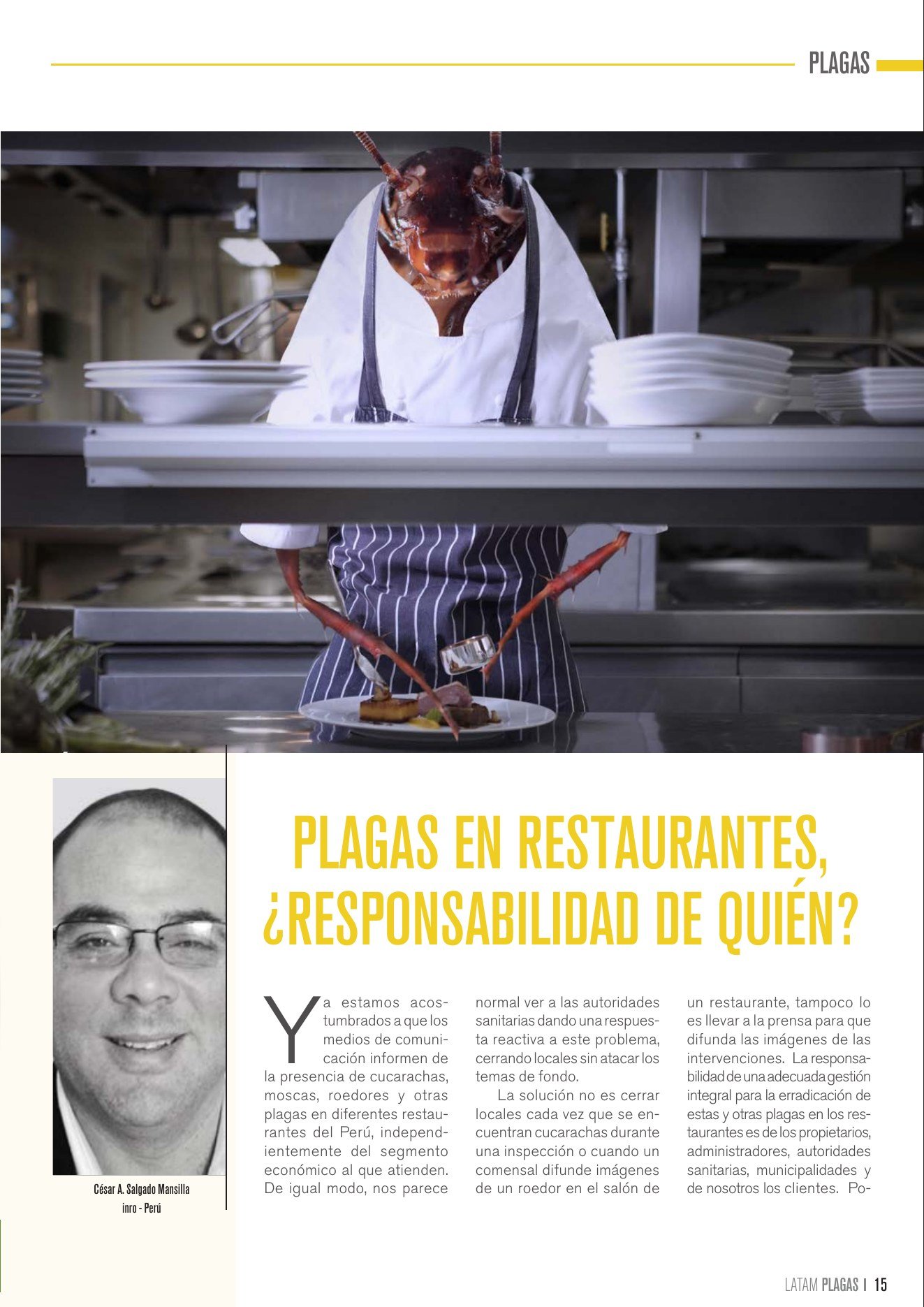
We are already accustomed to the media reporting the presence of cockroaches, flies, rodents and other pests in different restaurants in Peru, regardless of the economic segment they serve. Likewise, it seems normal to us to see health authorities giving a reactive response to this problem, closing stores without attacking the underlying issues.
The solution is not to close establishments every time cockroaches are found during an inspection or when a diner spreads images of a rodent in the dining room of a restaurant, nor is it to invite the press to spread the images of the interventions. The responsibility for adequate comprehensive management to eradicate these and other pests in restaurants lies with the owners, administrators, health authorities, municipalities and us, the customers.
We could then speak of a shared responsibility where each actor has specific functions, all of them regulated in our current legislation.
To begin with, we have the owners and/or administrators of the premises, they can be restaurants, cafes, catering services, among others. They have the responsibility of implementing appropriate sanitary measures such as order, cleaning and disinfection, which are contemplated in the sanitary standard and are mandatory. They must also establish fumigation, deratization and comprehensive pest control programs, not only to comply with the law but, most importantly, to avoid bad times for their clients. To achieve this effective pest management, it is necessary to have professionals who specialize in the subject, and if there are none, hire specialized companies.
In second place are the health authorities and municipalities. They are responsible for supervision so that these preventive measures are implemented and complied with appropriately. Reactive action only harms businesses economically and does not allow us to see the root causes of the problem, such as the lack of hygiene in the premises' facilities and the poor application of good manufacturing practices.
Finally, we as consumers have the right to demand that all of this be fulfilled so as not to put our health at risk. Customers are part of the solution to this problem and we must pay more attention to see if good manufacturing practices are the priority in the places where we consume our food. If we realize that the location where we are does not comply with these good practices, we must take the time to file a complaint. However, this may not be enough to bring about positive change. If possible, we should also report bad practices to the appropriate authority.
If we all fulfill our responsibilities fully, little by little we will achieve the expected change in the health culture of our country.