
New alternatives for the control of Aedes aegypti
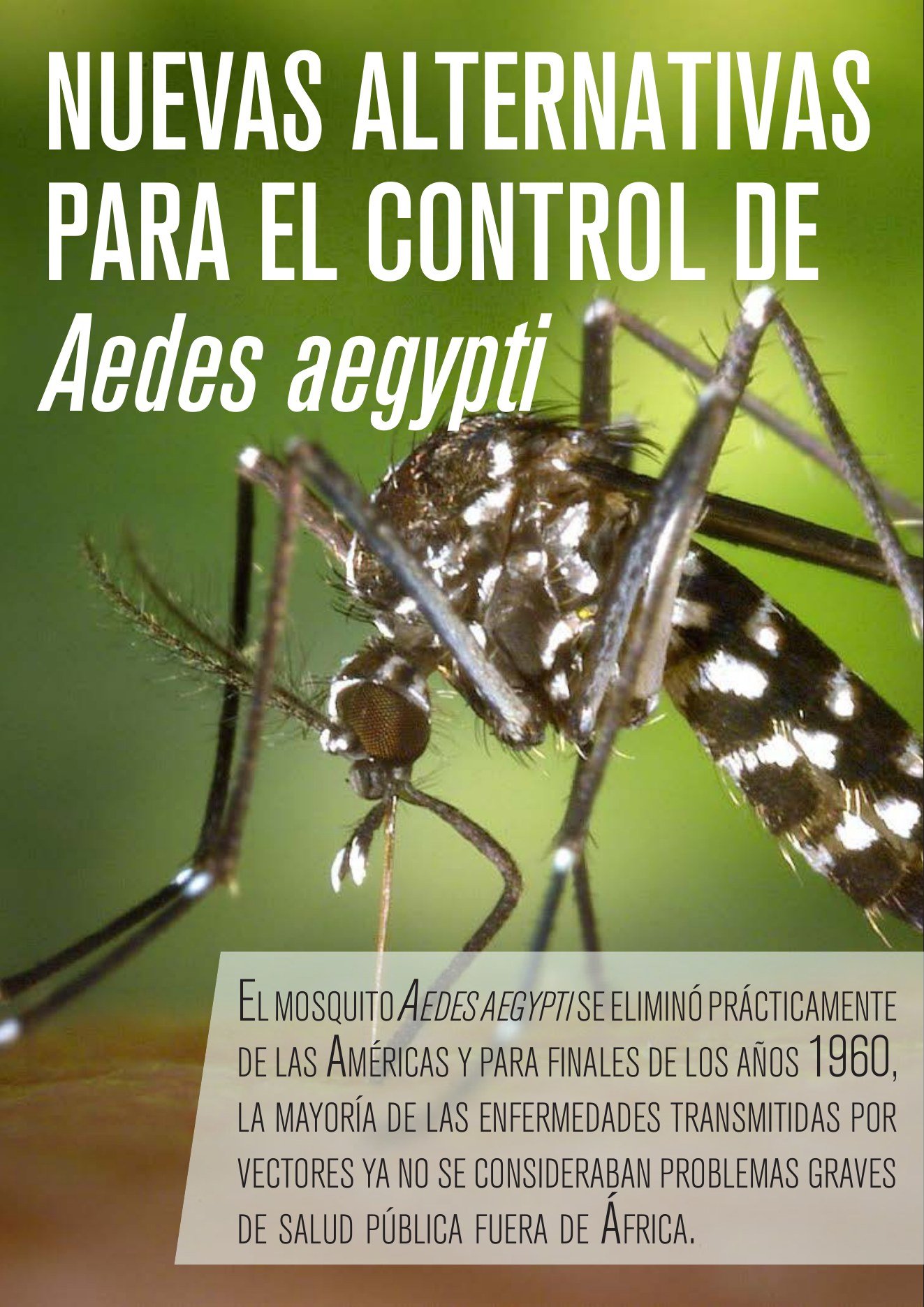
The mosquito Aedes aegypti was virtually eliminated from the Americas and by the late 1960s, most vector-borne diseases were no longer considered serious public health problems outside Africa..
Technical summary
- Focus
- The mosquito Aedes aegypti was virtually eliminated from the Americas and by the late 1960s, most vector-borne diseases were no longer considered serious public health problems outside Africa.
- Approach
- The article structures the analysis around Genetically modified mosquitoes, Sterile male technique and Mosquitoes infected with Wolbachia.
- Use
- Useful for professionals who need context, diagnosis and operational decisions in public health and vectors.
Index
The mosquito Aedes aegypti was virtually eliminated from the Americas and by the late 1960s, most vector-borne diseases were no longer considered serious public health problems outside Africa.
Thanks to the discovery and effective use of residual insecticides in the 1940s, large-scale systematic control programs brought most vector-borne diseases under control in many parts of the world.
The mosquito Aedes aegypti was virtually eliminated from the Americas and by the late 1960s, most vector-borne diseases were no longer considered serious public health problems outside Africa.
Mosquitoes and the diseases they transmit returned with a vengeance to an environment in which few defenses were left intact, and the arsenal of effective insecticides diminished as mosquitoes became resistant to them.
For this reason, for more than 5 decades, the World Health Organization and its Regional Offices have joined forces in search of alternatives for control, given the severity of the crises caused in many countries by Dengue and other arboviruses transmitted by Aedes, which is why the WHO Vector Control Advisory Group has been evaluating some new tools for vector control.
Genetically modified mosquitoes
Regarding genetically modified mosquitoes, the WHO Advisory Group has recommended further field trials and new risk assessments to determine the impact of this new tool on disease transmission.
Trials carried out in the Cayman Islands and Brazil showed a significant reduction in the population of Aedes aegypti. The genetically modified males would have greater physical capacity than the wild ones and would therefore compete better with wild males when mating with females.
The offspring of the transgenic mosquitoes survive the late larval stages and the early pupal stage, but do not reach the adult stage.
Sterile male technique
It consists of the massive release of male insects sterilized with low doses of radiation. When sterile males mate, the females' eggs are not viable and the insect population disappears. This technique has been successfully used on a large scale by the International Atomic Energy Agency and FAO to control insect pests harmful to agriculture.
Mosquitoes infected with Wolbachia
It is a promising biological control method and consists of the use of male mosquitoes carrying bacteria of the genus Wolbachia, which are naturally present in 60% of common insects, such as butterflies and fruit flies. These bacteria do not infect humans or other mammals.
When females mate with males carrying the bacteria, the eggs do not hatch, leading to the extinction of mosquito populations. Another strain of Wolbachia, which is being investigated, allows the bacteria to be introduced into mosquito populations and reduce the ability of mosquitoes to transmit the Dengue virus.
Natular DT
NATULAR DT (105 mg spinosad/tablet) is a product of a new generation of biological larvicide for the control of Aedes aegypti, with WHOPES and EPA certification, in addition to belonging to Group 5 of IRAC insecticides.
The bacteria was identified in 1988, coming from the soil of an old distillery in the Caribbean, and in 1989 its properties as an insecticide to control mosquito larvae were discovered. Its commercial name is Natular DT and its chemical name is spinosad, which is a bioinsecticide of natural origin, a product of the fermentation of actinomycete. Saacharopolyspora spinosa.
The neurotoxin is composed of a mixture of spinosins A and D, which act on the postsynaptic nicotinic acetylcholine receptors and GABA receptors. Its action is by ingestion and very little by contact.
Its presentation is a double-layer tablet, one quick release and the other slow release, ready to be used in 200 liter containers of drinking water, especially for the control of larvae of Aedes aegypti; It is non-toxic and has residuality greater than or equal to 90 days.
The product is used systematically in the United States, Mexico and Central American countries and is currently being tested for registration in Cuba and Peru.