
The importance of IPM for the food industry
Pests are an integral part of our world, they are attracted to food and can cause serious problems in facilities where food is handled, manufactured or sold at retail.
Technical summary
- Focus
- Pests are an integral part of our world, they are attracted to food and can cause serious problems in facilities where food is handled, manufactured or sold at retail.
- Approach
- The article structures the analysis around IPM FOR FOOD HANDLING FACILITIES.
- Use
- Useful for professionals who need context, diagnosis and operational decisions in integrated management.
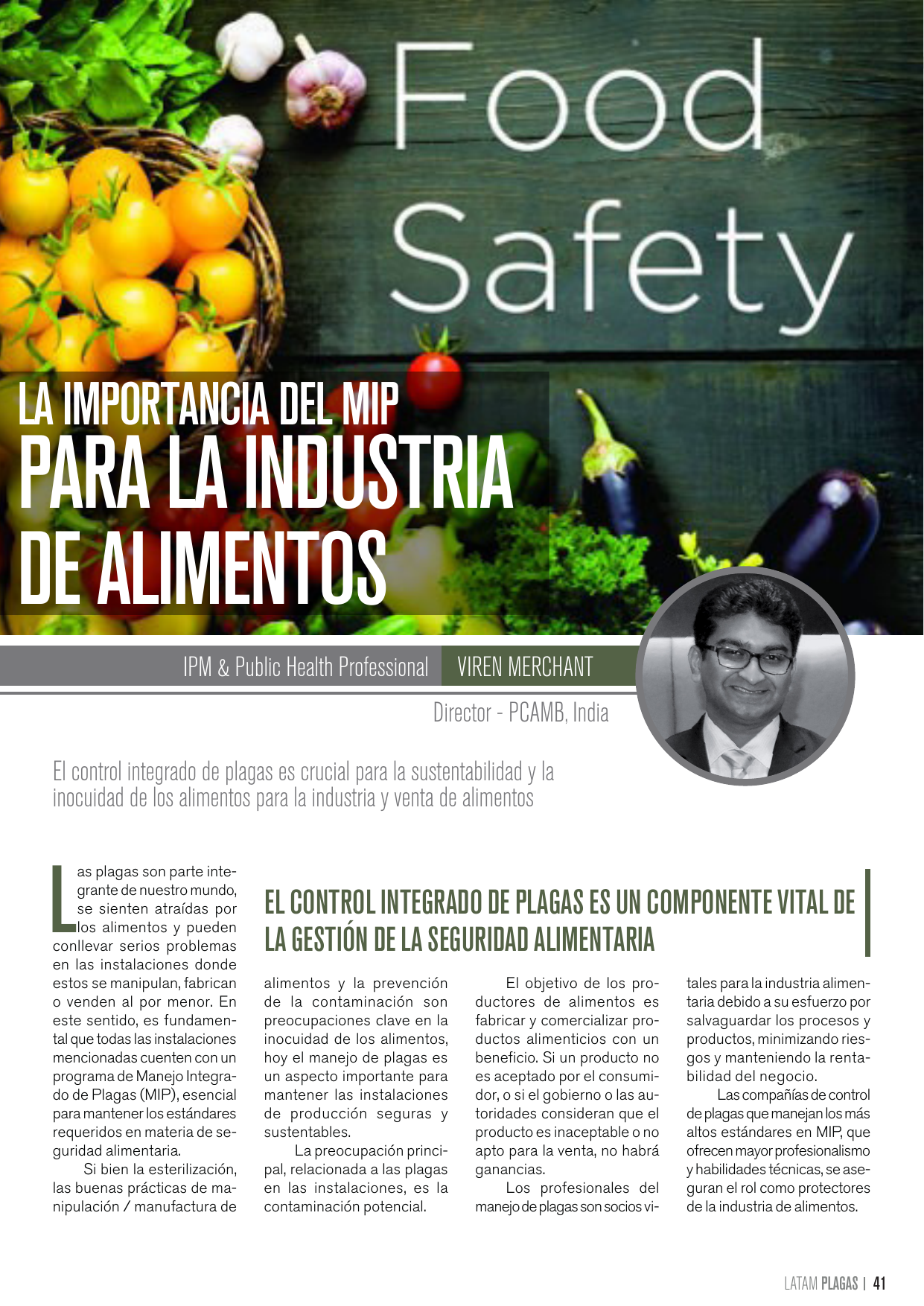
Pests are an integral part of our world, they are attracted to food and can cause serious problems in facilities where food is handled, manufactured or sold at retail. In this sense, it is essential that all the aforementioned facilities have an Integrated Pest Management (IPM) program, essential to maintain the required standards in terms of food safety. While sterilization, good handling/manufacturing practices of
INTEGRATED PEST CONTROL IS A VITAL COMPONENT OF FOOD SAFETY MANAGEMENT Food and contamination prevention are key concerns in food safety, today pest management is an important aspect of keeping production facilities safe and sustainable. The primary concern related to pests in facilities is potential contamination.
The goal of food producers is to manufacture and market food products at a profit. If a product is not accepted by the consumer, or if the government or authorities consider the product unacceptable or unfit for sale, there will be no profit. Pest management professionals are vital partners for the food industry due to their efforts to safeguard processes and products, minimizing risks and maintaining business profitability. Pest control companies that manage the highest standards in IPM, offering greater professionalism and technical skills, secure their role as protectors of the food industry.
IPM FOR FOOD HANDLING FACILITIES
The sanitation of a food facility is only as successful as its IPM program. IPM must address both the interior and exterior of the facility, along with the management of incoming supplies (raw materials, other input materials). An IPM program should be designed to prioritize exclusion and airtightness by keeping pests out of the facility. Any program should focus on preventative measures, rather than looking for solutions once pests have already entered. IPM minimizes the use of insecticides in pest prevention. Commercial food establishments must comply with high standards imposed by national and international control organizations that seek to promote good manufacturing practices in all production areas. In different countries there are government agencies, authorities that set global food standards, international auditing companies, etc. An essential part of establishing what the client expects from pest control services is communication between both. This will allow us to know the expectations of the “user” of the service and will facilitate the
THE DAMAGE THAT PESTS CAN CAUSE IN RAW MATERIALS, PRODUCTS, PACKAGING, AND EVEN TO THE BRAND, ARE EXTREMELY COUNTERPRODUCTIVE FOR FOOD FACTORIES WORLDWIDE design and development of an IPM program according to the facilities and management of said establishment. The most common pests affecting food facilities are cockroaches, rodents, flies, ants and birds which can have a direct impact on food and property. Mosquitoes that may find harborage in food facilities are known vectors that result in deadly communicable diseases and could have a serious impact on employee health. The sustainability of the IPM program is the result of the evaluation of the facilities individually and periodically, which must cover all areas inside and outside them, as well as the evaluation of processes, historical data and conditions that could affect said program. This must be done with a certain periodicity, and will depend on how critical the situation is; or when a pest population threatens the hygienic safety of the facility
food producer. This evaluation is useful to monitor the effectiveness of the IPM program, update prevention measures, and protect against insecticide resistance of pests. The results of these evaluations should be recorded and used to develop and update the IPM program. It is evident that in today's world, where food safety is priceless, integrated pest control services are an integral part of hygiene and sustainability considerations for the food industry.
An effective IPM program for food facilities includes: Inspection: Audit of pests found in the facility. Prevention: Elimination of the source of entry and restriction of access of the pest. Identification and analysis: Of pests. Treatment strategy: Judicious use of pesticides. Monitoring. Documentation and communication with the client.
THE SUSTAINABILITY OF THE IPM PROGRAM IS THE RESULT OF THE EVALUATION OF THE FACILITIES ON AN INDIVIDUAL AND PERIODIC BASIS, WHICH SHOULD COVER ALL AREAS INSIDE AND OUTSIDE THEM, AS WELL AS THE EVALUATION OF THE PROCESSES, HISTORICAL DATA AND CONDITIONS THAT COULD AFFECT SAID PROGRAM